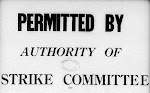
Monday, September 7

Saturday, September 5
Legal Beagles Part 2: Royal Commissions
Another source of legal activity were the two main Royal Commissions happening in 1919.
Name: The Commission to Inquire into and Report upon Industrial Relations in Canada (often short-titled to the Royal Commission on Industrial Relations or the 'Mathers Commission')
Government: Dominion of Canada
Time of Activity: April - June 1919
Date of Report: July 1, 1919 (Tablled in House)
Chair: Thomas Graham Mathers
Detail: The Royal Commission to enquire into and report upon the causes and effects of the General Strike which recently existed in the City of Winnipeg for a period of six weeks, including the methods of calling and carrying on such strike
Name: The "Royal Commission to enquire into and report upon the causes and effects of the General Strike which recently existed in the City of Winnipeg for a period of six weeks, including the methods of calling and carrying on such strike" (often short-titled to the Royal Commission on the Winnipeg General Strike or 'The Robson Commission').
Government: Province of Manitoba
Time of Activity: July - November 1919
Date of Report: November 6, 1919 (not made public until March 20, 1920)
Chair: Hugh Amos Robson
Detail: That title sort of sums it up !
Name: The Commission to Inquire into and Report upon Industrial Relations in Canada (often short-titled to the Royal Commission on Industrial Relations or the 'Mathers Commission')
Government: Dominion of Canada
Time of Activity: April - June 1919
Date of Report: July 1, 1919 (Tablled in House)
Chair: Thomas Graham Mathers
Detail: The Royal Commission to enquire into and report upon the causes and effects of the General Strike which recently existed in the City of Winnipeg for a period of six weeks, including the methods of calling and carrying on such strike
Name: The "Royal Commission to enquire into and report upon the causes and effects of the General Strike which recently existed in the City of Winnipeg for a period of six weeks, including the methods of calling and carrying on such strike" (often short-titled to the Royal Commission on the Winnipeg General Strike or 'The Robson Commission').
Government: Province of Manitoba
Time of Activity: July - November 1919
Date of Report: November 6, 1919 (not made public until March 20, 1920)
Chair: Hugh Amos Robson
Detail: That title sort of sums it up !
Tuesday, September 1
1 September 1919: Protests Renewed
The Winnipeg Eight are still being held in prison awaiting trial. Protests for their release grow louder. The largest protest to-date was held September 1, 1919 as described in this article in the September 5th Western Labour News (to see full article).


Sunday, August 30
1919 Legal Beagles Part 1
The names of those who stood trial are still known, some celebrated, today. Post-strike there was another set of players to enter the arena: the legal teams. For them, these were not ordinary trials. They were a chance to make legal history.
Walter Pue, in a paper titled Cowboy Jurists & the Making of Legal Professionalism said of this era in Prairie law:
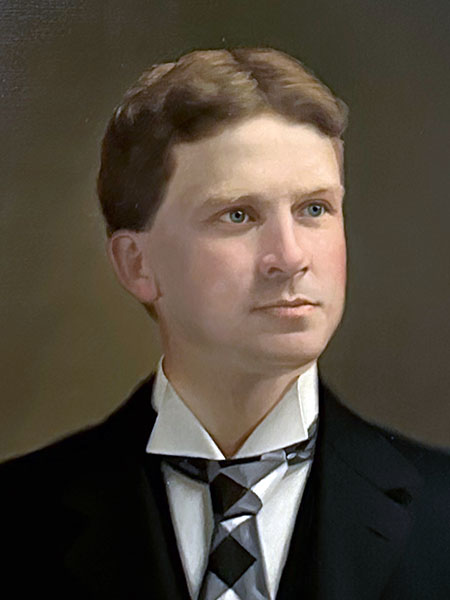 Alfred Joseph "A.J." Andrews - Was mayor in 1898-99. He led the team for the Committee.
 Issac Pitblado At the time he was a member and cousel for the Committee as well as the head of the Manitoba Law Society. The Isaac Pitblado Lectures have been held annually for almost 50 years.
Travers Sweatman - (no image) Famous for having defended Thomas Kelly during the Manitoba Legislative Scandal. He would later become a judge (source) nominated by A.J. Andrews (source)
 James Bowes Coyne A member of the Aikins firm
Thomas J. Murray K.C. (no image) Represented Moses Chartinoff
 Marcus Hyman - Defended the 'radical aliens', those born outside Canada, facing deportation by the the Board of Inquiry. Later in life he became an MLA and introduced The Manitoba Defamation Act (1934) - the first Canadian group libel law, and the only one until 1970 (source).
E.J. Murray (no image)
Reference:
All that I could find on-line were written by those on the side of labour. If anyone has a link to something from the other side or from a legal point of view please share !
"Repressive Measures": AJ Andrews, the Committee of 1000 and the Campaign Against Radicalism after the Winnipeg General Strike
"Legal Gentlemen Appointed by the Federal Government": the Canadian State, the Citizens' Committee of 1000, and Winnipeg's Seditious ConspiracyTrials of 1919–1920.
Walter Pue, in a paper titled Cowboy Jurists & the Making of Legal Professionalism said of this era in Prairie law:
"Lawyers combined agendas which were explicitly moral and reforming with a profound restructuring of their profession. Their efforts to reform the curriculum of formal legal education was part of a cultural project, but so too was their desire to attain self-regulation, monopoly, professional independence, and plenary disciplinary powers."
Who were some of these lawyers ? Here are a few of the key players. Note that by going to their bios you may see the outcome of some of the trials yet to appear here !Citizens Committee of 1000 lawyers:
Alfred Joseph "A.J." Andrews - Was mayor in 1898-99. He led the team for the Committee.Issac Pitblado At the time he was a member and cousel for the Committee as well as the head of the Manitoba Law Society. The Isaac Pitblado Lectures have been held annually for almost 50 years.Travers Sweatman - (no image) Famous for having defended Thomas Kelly during the Manitoba Legislative Scandal. He would later become a judge (source) nominated by A.J. Andrews (source)
James Bowes Coyne A member of the Aikins firmWinnipeg Trades and Labor Council lawyers
Thomas J. Murray K.C. (no image) Represented Moses Chartinoff
Marcus Hyman - Defended the 'radical aliens', those born outside Canada, facing deportation by the the Board of Inquiry. Later in life he became an MLA and introduced The Manitoba Defamation Act (1934) - the first Canadian group libel law, and the only one until 1970 (source).E.J. Murray (no image)
Reference:
All that I could find on-line were written by those on the side of labour. If anyone has a link to something from the other side or from a legal point of view please share !
"Repressive Measures": AJ Andrews, the Committee of 1000 and the Campaign Against Radicalism after the Winnipeg General Strike
"Legal Gentlemen Appointed by the Federal Government": the Canadian State, the Citizens' Committee of 1000, and Winnipeg's Seditious ConspiracyTrials of 1919–1920.
Thursday, August 27
27 August, 1919 - The Newsstand

Saturday, August 1
August 1, 1919: The Winnipeg Eight
 Source
Following those arrested and what happened to them will be the next section of this blog. I will try to follow as many as I can, though there is less detail available on-line as there was for the actual strike itself.
One group that I certainly will follow are "The Winnipeg Eight". These strike leaders, who by now were household names, were all arrested / had warrants issued for their arrest on June 17, 1919. They faced multiple charges of sedition.
Sent to Stoney Mountain (see above photo) to await their trials as of August 1 they were still waiting in jail.
Those eight are:
 William Ivens
Born: Barford, England, 1878
 Robert Boyd "R.B." Russell
Born: Glasgow, Scotland, 1888
 Richard J "Dick"Johns
 John Queen
 Normal 0 false false false MicrosoftInternetExplorer4 Alderman for Ward 5 (North End). Member of Social Democratic Party and business agent / advertising manager for the Western Labor News. Arrested June 17 on multiple charges of sedition.
 Abram Albert "A.A." Heaps
One group that I certainly will follow are "The Winnipeg Eight". These strike leaders, who by now were household names, were all arrested / had warrants issued for their arrest on June 17, 1919. They faced multiple charges of sedition.
Sent to Stoney Mountain (see above photo) to await their trials as of August 1 they were still waiting in jail.
Those eight are:
 William Ivens
Born: Barford, England, 1878
Former Methodist minister. Editor of the Western Labour News. Arrested June 17 on multiple counts of seditious conspiracy.
 Robert Boyd "R.B." Russell
Born: Glasgow, Scotland, 1888
OBU delegate, union leader and member of Central Strike Committee. Arrested June 17 on multiple charges of seditious libel.
 Richard J "Dick"Johns
 Born: Cornwall, England, 1889.
CPR Machinist, Manitoba leader for the OBU. Arrest warrant issued June 17, (while he was in Montréal). Charged with seditious conspiracy.
CPR Machinist, Manitoba leader for the OBU. Arrest warrant issued June 17, (while he was in Montréal). Charged with seditious conspiracy.
 John Queen
 Born: Lanarkshire, Scotland, 1882
 Abram Albert "A.A." Heaps
 Born: Leeds, England, 1885
Member of Social Democratic Party, oversaw operations for the strike committee. Arrested June 17, 1919 on charges of sedition.

George Armstrong
Born: 1870 Scarborough, Ontario, 1870
Union Organizer, member of Socialist Party, prominent Marxist. Arrested June 17 on seven counts of seditious conspiracy
 Roger Bray
 Born: Sheffield, England
 William A. (Bill) Pritchard
Butcher, Lay Methodist preacher, spokesman for returned soldiers and leader of veterans’ parades. Arrested June 17 on multiple charges of seditious conspiracy
 William A. (Bill) Pritchard
Born: Salford, England, 1888.
B.C.-based, editor of socialist newspaper and OBU delegate. Warrant issued for arrest for sedition, captured on a train in Calgary while returning to B.C.
B.C.-based, editor of socialist newspaper and OBU delegate. Warrant issued for arrest for sedition, captured on a train in Calgary while returning to B.C.
Friday, July 31
Strike! The Musical July 30th - August 5th
July 30th - August 5th, 2009
The first annual run of Strike! at Winnipeg's Canwest Performing Arts Centre at the Forks, Winnipeg. Show times for this 8-show limited engagement are 8:00 PM daily with an additional 2:00 PM Sunday matinée on August 2nd.
For More Info
The first annual run of Strike! at Winnipeg's Canwest Performing Arts Centre at the Forks, Winnipeg. Show times for this 8-show limited engagement are 8:00 PM daily with an additional 2:00 PM Sunday matinée on August 2nd.
For More Info
Thursday, July 30
Reconstruction from the Viewpoint of Labor
After the strike, J.S. Woodworth released Reconstruction From the Viewpoint of Labor.

The time has come now when we must figuratively sit down and ask ourselves two questions: 1. what do we want and 2. how are we going to get it.

Sunday, July 26
Citizens Committee Briefing Book
In 1920 the Citizens Committee of 1000 published a 30 page briefing booklet about the strike.
A goal of the Committee was to share "best practises" with other communities that are, or may, deal with large-scale labour unrest. During and after the strike members would make presentations (see earlier entry for Moose Jaw).
 This booklet outlines the history of the strike from their point of view. It also provides great detail about the organization and activities of the committee. The final section is a detailed "how to" guide when it comes to dealing with unrest and how to set up a civilian government should the unrest turn to a general strike.
A goal of the Committee was to share "best practises" with other communities that are, or may, deal with large-scale labour unrest. During and after the strike members would make presentations (see earlier entry for Moose Jaw).
 This booklet outlines the history of the strike from their point of view. It also provides great detail about the organization and activities of the committee. The final section is a detailed "how to" guide when it comes to dealing with unrest and how to set up a civilian government should the unrest turn to a general strike.
Tuesday, July 21
Workers' Defence Fund and Liberty Bonds
Set up after the arrests during the strike, the Workers' Defence Fund appealed for money to go toward court costs. This is from the June 26 Enlightener:
 Eventually your donation would get you a paper "bond".
 Front and back of bond. Source

 Eventually your donation would get you a paper "bond".
 Front and back of bond. Source
Monday, July 20

Friday, July 17
17 July 1919 - The Robson Commission
 While the trials were going through the courts the Justice H.A. Robson's Royal Commission was sputtering to get started.
 Manitoba Free Press 17 July 1919
Sunday, July 12
July 1919 - 'The Robson Commission'
The "Royal Commission to enquire into and report upon the causes and effects of the General Strike which recently existed in the City of Winnipeg for a period of six weeks, including the methods of calling and carrying on such strike" (often short-titled to the Royal Commission on the Winnipeg General Strike or "The Robson Commission") was created in July 1919 by the Manitoba Government and chaired by Hugh Amos Robson.
 The report, which can be read in it's entirety here, was underway but would not report back to the Province until November 6, 1919 and the report would not be made public until March 29, 1920 (I won't release the results until then either !).
 Image source and a more detailed bio:
The Court of Queen's Bench of Manitoba, 1870-1950 By Dale Brawn, Osgoode Society for Canadian Legal History
 The report, which can be read in it's entirety here, was underway but would not report back to the Province until November 6, 1919 and the report would not be made public until March 29, 1920 (I won't release the results until then either !).
 Image source and a more detailed bio:
The Court of Queen's Bench of Manitoba, 1870-1950 By Dale Brawn, Osgoode Society for Canadian Legal History
Saturday, July 11
July 1919 - Woodsworth's Incarceration In His Own Words
Woodsworth was arrested the night of June 21st. In July 1919, while out on bail, he wrote of his time at Stony Mountain.

Tuesday, July 7
Arrest Watch: 7 July 1919
From the Alberta Non-Partisan, July 7, 1919, Page 12
Life and Work: The arrested Strike Leaders and Democracy
Life and Work: The arrested Strike Leaders and Democracy
Monday, July 6
The strike is not done yet ! A musical interlude !
Just taking a breather until mid-July. There are trials and other aftermath still cover !
If you did not catch the outdoor performance of Danny Schur's Strike The Musical, or if you did and you are till tapping your toes, you can catch excerpts on Weds July 8 from Noon to 1 pm at Centre Court, Portage Place.
This is all in aid of the full length theatrical debut from Jul 30 - Aug 5 at the Canwest Performing Arts Centre (Theatre for Young People) venue at The Forks. Info for that can be found here.
If you did not catch the outdoor performance of Danny Schur's Strike The Musical, or if you did and you are till tapping your toes, you can catch excerpts on Weds July 8 from Noon to 1 pm at Centre Court, Portage Place.
This is all in aid of the full length theatrical debut from Jul 30 - Aug 5 at the Canwest Performing Arts Centre (Theatre for Young People) venue at The Forks. Info for that can be found here.
Thursday, July 2
2 July 1919 - War Vets Resume Meetings
 As they promised at the beginning of the strike, the Imperial Veterans did not meet until a week after the end date of the strike.
Wednesday, July 1
Arrest Watch - Raw Data
Over the weeks a number of people were arrested - perhaps hundreds.
I am creating an 'arrest watch' list from names taken from articles trying to match them up with their outcomes. Due to the numbers I will not reference every article that I found them in but here is a sampling of some of them:
 Manitoba Free Press June 25, 1919
 20 June 1919
 Telegram Jun 27, 1919
 June 17, 1919
 Winnipeg Telegram June 18, 1919
 Winnipeg Telegram June 23, 1919
 Manitoba Free Press June 23, 1919
I am creating an 'arrest watch' list from names taken from articles trying to match them up with their outcomes. Due to the numbers I will not reference every article that I found them in but here is a sampling of some of them:
 Manitoba Free Press June 25, 1919
 20 June 1919
 Telegram Jun 27, 1919
 June 17, 1919
 Winnipeg Telegram June 18, 1919
 Winnipeg Telegram June 23, 1919
 Manitoba Free Press June 23, 1919
1 July 1919 - 'The Mathers Commission'
The Commission to Inquire into and Report upon Industrial Relations in Canada, often referred to as the 'Mathers Commission' was struck in March 1919 by the Borden Government. It's chair was Thomas Graham Mathers was Chief Justice of Manitoba.
 The Commission's mandate was to inquire and report back on the following:
(1) To consider and make suggestions for securing a permanent improvement in the relations between employers and employees.
(2) To recommend means for ensuring that industrial conditions affecting relations between employers and employees shall be reviewed from time to time by those concerned, with a view to improving conditions in the future. (source)
Between April and June 1919 the Commission visited 28 municipalities and heard from 486 witnesses. The Winnipeg dates were May 10 - 13, 1919. The labour side wanted little part in a government inquest and there was not a great deal of representation. The side of industry, however, took advantage of the hearings to air their grievances. (see Conflict in Winnipeg p 107)
Of course the Commission was still in process when the Winnipeg General Strike took place. Its final report was ready and tabled in the House on July 1, 1919.
Their findings included the fact that the 'chief causes of discontentment were: unemployment, the rising cost of living, long working hours, lack of collective bargaining rights, the housing shortage, restrictions on freedom of speech and the press, and unequal educational opportunities'. (source)
Related:
The Commission Report (also printed as a supplement to the Labour Gazette, July 1919) is not yet available online.
Photo source and more detailed bio of Mathers:
The Court of Queen's Bench of Manitoba, 1870-1950: a biographical history
 The Commission's mandate was to inquire and report back on the following:
(1) To consider and make suggestions for securing a permanent improvement in the relations between employers and employees.
(2) To recommend means for ensuring that industrial conditions affecting relations between employers and employees shall be reviewed from time to time by those concerned, with a view to improving conditions in the future. (source)
Between April and June 1919 the Commission visited 28 municipalities and heard from 486 witnesses. The Winnipeg dates were May 10 - 13, 1919. The labour side wanted little part in a government inquest and there was not a great deal of representation. The side of industry, however, took advantage of the hearings to air their grievances. (see Conflict in Winnipeg p 107)
Of course the Commission was still in process when the Winnipeg General Strike took place. Its final report was ready and tabled in the House on July 1, 1919.
Their findings included the fact that the 'chief causes of discontentment were: unemployment, the rising cost of living, long working hours, lack of collective bargaining rights, the housing shortage, restrictions on freedom of speech and the press, and unequal educational opportunities'. (source)
Related:
The Commission Report (also printed as a supplement to the Labour Gazette, July 1919) is not yet available online.
Photo source and more detailed bio of Mathers:
The Court of Queen's Bench of Manitoba, 1870-1950: a biographical history
Sunday, June 28
Saturday, 28 June 1919
The Winnipeg Telegram publishes its final strike edition. Interestingly, under the headline "World Rejoices at Peace", it carries a story about the formal end of the war and a call for 'peace' in the city as well:


"Now that the strike is officially over let us make reasonable haste to make sure that it is over at the earliest possible moment".

Subscribe to:
Posts (Atom)